How a Retaining Wall Becomes the Most Useful Design Element on a Sloped Property in Andover, NJ
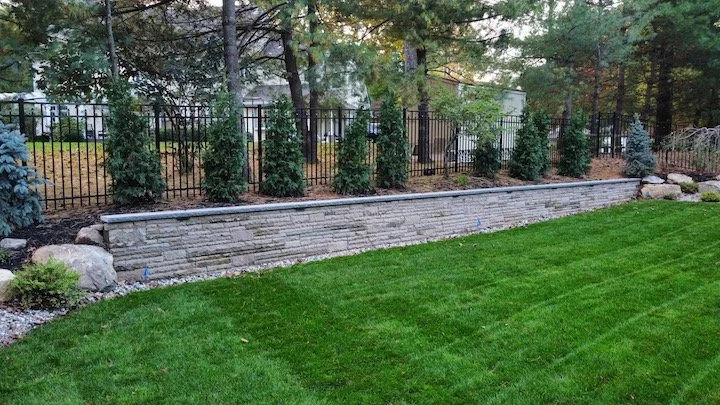
A sloped lot is not a problem to be hidden. It is an opportunity that most landscapes never realize, because the work required to take advantage of it, the engineering, the material selection, the integration with the rest of the design, asks more from the property owner than a flat yard ever does.
A retaining wall is the element that unlocks that potential. It holds the soil. It creates the level surfaces where outdoor living actually happens. It defines the character of the landscape with the materials and the proportions chosen. And in the Northern New Jersey region, where the topography rolls between ridges and valleys and the older properties carry stone and architectural heritage worth honoring, a well-designed retaining wall is one of the most expressive features a landscape can include.
Related: Maximize Your Outdoor Living with a Fire Pit & Retaining Wall in Randolph, NJ
What a Retaining Wall Should Accomplish
The functional purpose of a retaining wall is structural. The design purpose is broader. The wall does work, and it adds character, and the best installations do both at the level the property deserves.
A retaining wall on a Northern New Jersey property typically serves to:
Convert a slope that cannot be used into terraced spaces that can host a patio, a planting bed, a fire feature, or a seating area
Define the edge of a driveway, a walkway, or a parking area where the grade drops away from the surface
Manage drainage by interrupting surface water flow and routing it through controlled channels rather than letting it erode the landscape
Anchor a planting bed at the right elevation to support specimen trees, perennial displays, or screening plants that benefit from elevated soil and improved drainage
Provide integrated seating around fire features, patios, or pool decks through the inclusion of seating walls that combine structure and function
Each of these applications is structural. Each one is also aesthetic. A retaining wall does not have to look like a corrective measure. The right material and the right detailing produce a wall that contributes to the design rather than apologizing for the grade.
Related: Creating Functional and Elegant Backyards With Landscape Design & Retaining Walls in Denville, NJ
Why Material and Craftsmanship Define the Result
The wall material communicates the character of the landscape. Pennsylvania fieldstone reads as timeless and rooted in the regional vernacular. Bluestone offers a refined, classical aesthetic. Manufactured segmental block delivers consistency and a wide range of finishes for projects with budget and timeline considerations. Each material can produce a wall that performs structurally. Each material produces a different visual result.
The craftsmanship is what separates a wall that looks intentional from one that looks assembled. The cap detail. The corner treatment. The way the wall ties into adjacent hardscape and plantings. The proportion of the wall to the surrounding landscape. These are the details that distinguish a wall designed by a team that thinks about the whole property from one built to a generic specification.
What a Properly Built Wall Includes Beneath the Surface
The visible face is the finished product. The structural integrity comes from the base depth, the drainage behind the wall, the geogrid reinforcement on taller installations, and the backfill compacted in lifts to prevent future settling. None of it shows. All of it determines whether the wall lasts twenty years or starts moving in five.
If you are planning a retaining wall for your property in Andover or the surrounding communities, the conversation should begin with what the wall needs to accomplish and what character it should bring to the landscape. The construction follows from there.
Related: Why a Retaining Wall and Fire Pit in Wayne, NJ, Enhance Evening Entertaining at Home
About the Author
We've been doing this since 1965. What started as a family business in North Jersey is still one today. Brothers Paul and Sal lead every project, everything is designed in-house, and some of our crew members have been with us for 20 and 30 years. Our clients tend to tell us the same thing: "Make it beautiful. We trust you." We take that seriously and build every patio, outdoor kitchen, retaining wall and garden the way we'd build it in our own yard. From Towaco to our garden center in Andover, we design, build and care for residential and commercial properties across North Jersey. That covers custom stonework, lighting, irrigation, lawn care and snow management.