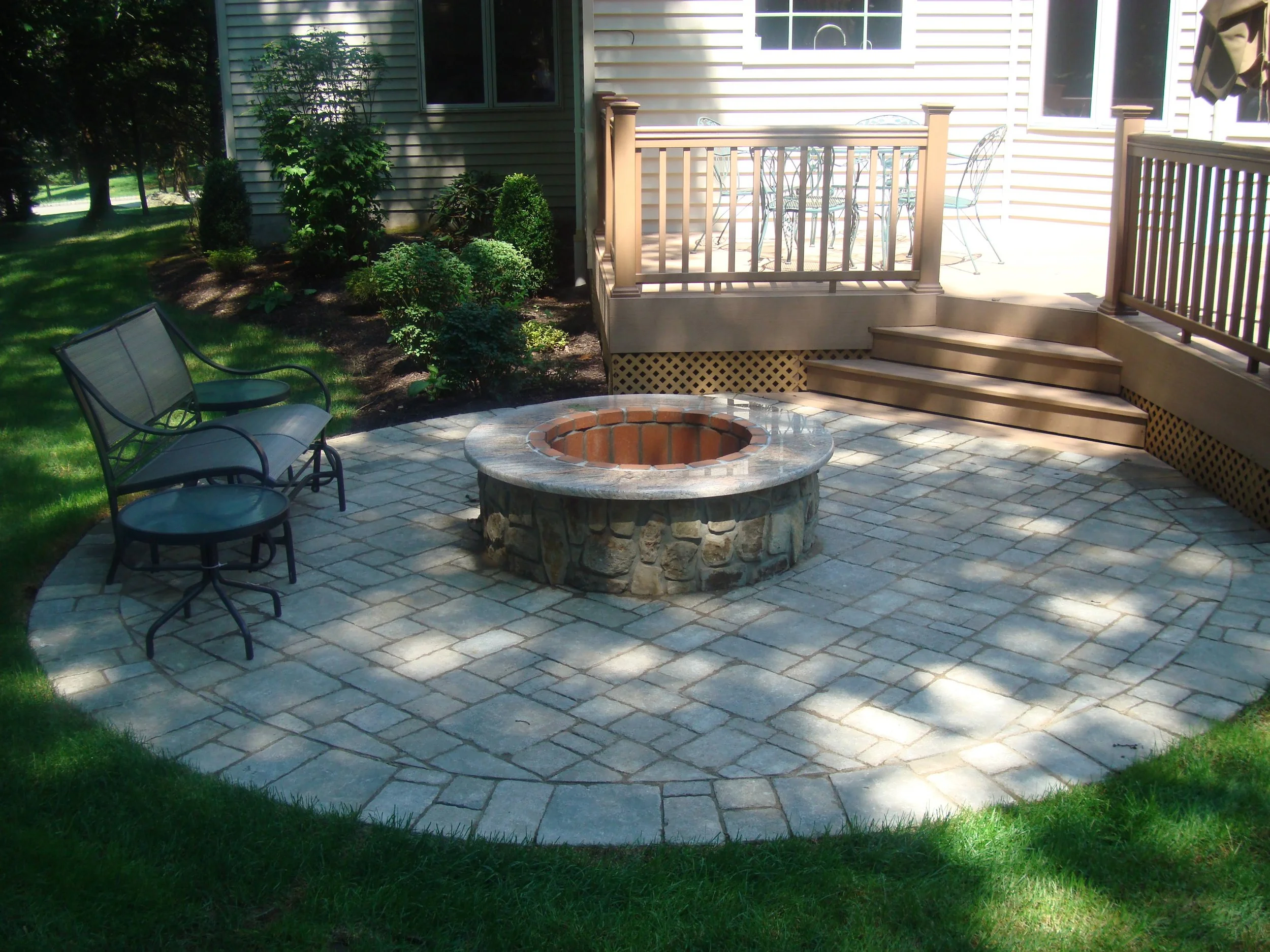
In Andover, NJ, and the surrounding North Jersey area, soil conditions, slopes, moisture, and winter weather all influence how your patio needs to be built.
A well-built paver patio starts long before the first paver is set. The finished surface gets the attention, but the base layer determines how the patio handles daily use, drainage, seasonal freeze-thaw cycles, and the natural movement of the ground beneath it.
When you hire our team to design and build your patio, we begin with the conditions under your feet. Our specialists look at the grade of your yard, how water moves across the space, where the patio connects to your home, and how the surface needs to support furniture, cooking areas, seat walls, steps, or nearby landscape features.
That information shapes the patio design and the construction plan.
Related: Paver Patio Ideas That Actually Work in North Jersey (Not Just Pinterest Pretty)
The Base Supports the Entire Patio System
Your patio is not made of pavers alone. It is a layered system. The base usually includes excavated soil, compacted aggregate, bedding material, edge restraints, joint material, and the pavers themselves. Each layer has a purpose.
The excavated area creates the correct depth for the system. The aggregate base distributes weight and gives the patio a stable foundation. The bedding layer allows our installers to set the pavers evenly. Edge restraints keep the pattern locked in place. Joint material fills the spaces between pavers and reduces shifting.
When one layer is rushed or poorly planned, the surface eventually shows it. Uneven spots, low areas, spreading edges, and water collection often trace back to the preparation beneath the patio.
Proper Excavation Sets the Standard
Excavation is one of the most important early steps. Our team removes the right amount of soil based on the patio’s intended use, the type of paver, and the surrounding grade. A patio for lounge seating may require different planning than a patio connected to an outdoor kitchen, fire feature, or retaining wall.
The excavation also needs to account for slope. A patio should direct water away from the home and toward the right drainage area. This slope is planned carefully so the patio feels comfortable underfoot while still moving water correctly.
In many North Jersey landscapes, drainage issues already exist before a patio project begins. Our experts identify those concerns during the planning stage instead of covering them with hardscape.
If water currently settles near your foundation, pools in low areas, or runs across the future patio location, the base design needs to address that movement.
Compaction Creates Stability
After excavation, the aggregate base is installed in layers and compacted. Compaction matters because loose material settles over time. When the base settles unevenly, the pavers above it follow that movement.
Our team uses professional compaction equipment to create a firm, even base. Instead of treating the base as one thick layer, we build and compact it in controlled lifts. This method creates a stronger foundation and reduces future surface movement.
Compaction also requires attention to moisture. Aggregates that are too dry or overly saturated does not compact the same way. Experienced installers understand how the material should respond during this stage.
Drainage Belongs in the Base Plan
A patio base needs to manage water, not trap it. Water that sits beneath the patio contributes to shifting, heaving, and surface irregularities. This is especially important in areas that experience freezing temperatures.
Our specialists evaluate where water enters and exits the patio area. Depending on the site, the plan may include grading adjustments, drainage stone, drains, or connections to a larger landscape drainage system. The right approach depends on your property, not a one-size-fits-all template.
This is where our design-build process matters. We look at the patio as part of the larger outdoor environment. Walkways, planting beds, lawn areas, downspouts, retaining walls, and outdoor living features all affect how water moves.
The Bedding Layer Refines the Surface
Once the compacted base is ready, the bedding layer creates the final setting surface for the pavers. This layer is not meant to correct major base problems. It fine-tunes the installation so the pavers sit evenly and follow the planned pattern and pitch.
Our installers screed this layer with care, then place the pavers according to the design. The pattern, borders, cuts, and transitions all depend on a properly prepared surface below.
A Better Patio Starts Below the Surface
When your patio is built correctly from the base up, you get an outdoor space that feels solid, drains properly, and fits the way you use your backyard.
Our team brings decades of landscape construction experience, detailed site planning, and full-service outdoor living expertise to every paver patio project in Andover, NJ, and the surrounding area.
The part of the patio you see every day matters. The part beneath it matters even more.
Related: 9 Ways to Enjoy Cozy Fire Pit Nights With Expert Landscape Design and a Paver Patio in Denville, NJ